
Month: September 2012

Who wants a B1 Tooth Shade?

We’ve seen many patients asking for the lightest teeth possible when they come to our practice in Harrow for teeth whitening, so we thought we write a blog post explaining more about the tooth shading system that we use, and how light is a B1  shade compared to an A3?

Many teeth whitening products on the market suggest that they can lighten teeth by 20 or 30 shades, however it all depends how you wish to grade those shades and how close together one decides to make them. Many times, all these companies do is add extra shades as half shades thereby increasing the number of shades they can lighten your teeth!
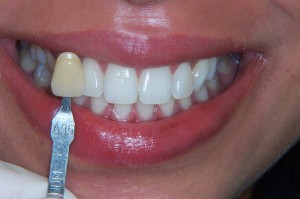
B1 tooth shade
Comparing a B1 tooth shade to a standard A3.5 colour

The professional way to monitor teeth whitening and how light your teeth are is by using an industry standard guide, rather than by making one up.

The normal tooth  shade  guide has four main categories – A, B, C, D. These range from yellowish, reddish tooth shades, through to greyer teeth.

Then within these categories there are up to 4 lightness shades – 1, 2, 3 & 4 with number 1 being the lightest.

There are a few variances of this, however to keep things simple this is the basic principle of how we measure tooth colour.

The average shade for a tooth is A3, this is considered a normal colour and around 70% of the population have natural teeth which are within this range.

A B1 shade is considerably lighter than A3 and is generally considered the lightest naturally occurring shade. However, with the advent of tooth whitening patient driven shades are now getting considerably lighter than this, and are often called Hollywood white shades. About 10 years ago if you asked the dentist to whiten your teeth to a B1 shade then this would have been considered very bright, however with more and more celebrities having their teeth whitening or even having veneers to an ultra-white colour this has driven popular public conception to consider that B1 is no longer white enough.


Our Harrow-based cosmetic dental practice is happy to discuss with you your current tooth colour shade and how light your teeth could possibly go with teeth whitening. We can look at a B1 shade compared to your current shade to see if this is too light for your skin tone and overall complexion. The practice in Harrow is easy to find and there is normally plenty of parking on the street outside.

Dr Nishan Dixit
Latest posts by Dr Nishan Dixit (see all)

“I have a wedding to go to and I can’t smile “


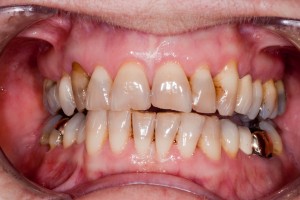
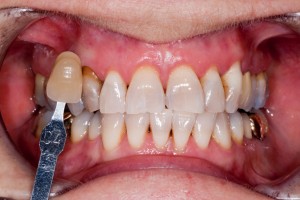
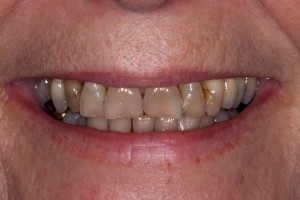
This lady was soon to attend a close family wedding but she was unhappy and embarassed about her smile. She didn’t like her heavily discoloured, grey teeth and wanted to make then whiter so that she could smile in the photos.

We decided to use the teeth whitening system to give her the dazzling smile that she desired. We managed to change her teeth from a grey C2 shade to a shade near to B1. She was absolutely delighted with the immediate and instant result that we achieved.


To improve the smile further,  the patient has decides to undergo further cosmetic treatment.

Toothpicks and Keeping your Teeth Clean

There was a recent case reported in the British Medical Journal in which a woman swallowed a toothpick which went on to cause some quite serious further medical and health problems for her. This was also reported on the BBC, you can read the full BBC report here.

Clearly this woman was trying to clean her teeth with a toothpick, so we thought it would be a good idea to go through how to keep your teeth clean and hopefully avoid such accidents in the future!

You oral healthcare regime should include brushing, flossing and rinsing.

Teaching the people of Harrow how to brush.

  • Using an electric toothbrush is the best way to brush your teeth as they are designed to have the perfect action. If you use a manual brushing technique use a small brush and work in a circular motion.
  • Decide on a sequence to brushing your teeth and stick with it each day, ensuring that you brush the biting surface or tips of your teeth, the inside and then the outside.
  • Move around the sequence tooth by tooth. Avoid pressing too hard, but make sure you clean adequately. This is where an electric toothbrush will help as many of the better models have pressure sensors.
  • Ensure that you clean around the entire tooth surface right the way from the inside, over the top and down the front of the tooth including the junction between your tooth and the gum.

Top tips for flossing your teeth.

  • Floss daily between your teeth, this ensures that any debris is cleaned on the surfaces between your teeth which is so difficult to reach with a toothbrush.
  • Use a fairly long length of floss, about 30 cm. Wind the ends around your index fingers on each hand and pull floss taught.
  • You can then gently pop floss between each of your teeth each time winding it a small amount along on each finger.
  • Gently move the floss up and down against the back of one tooth and then the front of the next, pop floss back up again, and move along to the next tooth.

Rinsing with mouthwash.

Even with an electric toothbrush and flossing there may be small areas that you miss, so using a good-quality fluoride mouthwash will help you to rinse out any areas of debris that you have missed.
Rinse with mouthwash after every time you brush your teeth, both morning and night.
Our dental practice in Harrow also has a dental health educator known as a Dental Hygienist, this person is specially trained to help you look after your teeth and help you with your oral health plan. Looking after your teeth is the best way to spend as little time and money at the dentist as possible, so it’s a worthwhile investment in yourself.


Harrow dentist introduces free information pack for dental veneers

Are you concerned about the look of your teeth?

Have you considered dental veneers in the past?

Are you looking for more information on dental veneers?

More and more people in the Harrow area have had dental veneers, and are now smiling with confidence. These veneers are a modern way to have whiter or straighter teeth, or to disguise chipped or broken down teeth.

What are dental veneers?

Dental veneers are  thin shells  of specially made dental ceramic made by a skilled dental technician to a precise prescription written by the dentist. These thin shells fit precisely over your existing teeth, with the outer layer of the dental veneers being the perfect colour and shape. The dental veneer is then the part that other people see and will look exactly like natural, brighter and whiter straight teeth.

How our dental veneers made?

Your dentist will decide on the number of dental veneers that I write to help you achieve the smile that you desire. It is generally considered best practice to opt for the minimum number of veneers, in order to achieve your ideal smile. The dentist then takes a mould of your teeth, which is sent to a dental laboratory. This dental laboratory then pour some high strength dental plaster into this mould to create an exact replica of your current teeth.

The dental technician will then craft your new dental veneers over the top of this mould to the exact prescription of the dentist, taking into account the final position, colour and shape that you would like your new dental veneers to be.

How long do dental veneers last?

This is a very difficult question to answer. The most common reason that dental veneers are replaced is either due to the patient getting older (which unfortunately we all do) or the veneer chipping.

Replacing dental veneers due to age.

When a dental veneer is made for the first time, it will fit precisely the gum margin. However, as we age this gum margin moves and the tooth appears to get longer, hence the expression longer in the tooth. If the dental veneer is a different colour from the underlying two, this margin, or junction, will now be exposed. In order to disguise this a new dental veneer can be made which extends down to the new gum margin of the older patient.

Replacing dental veneers due to chipping.

If the veneers are carefully looked after, they should last for many many years. The most common reason that veneers chip is if they are hit with a glass or mug whilst the patient is drinking. The only way to prevent dental veneers chipping in this way, is to be more careful! And remember that natural teeth can chip this same way to.

What to do if you want dental veneers.

If you are unhappy about your smile, then the best thing to do  is to either request a cosmetic consultation at our Harrow-based dental practice or download our free guide to a confident, whiter and straighter smile with dental veneers. This free information pack for dental veneers has been specially written to include all of the options for cosmetic dentistry, and will give you an insight into whether veneers are right for of cosmetic dental option for you.