
Archive for the ‘Oral Hygiene’ Category

Do You Have a Higher Chance of Developing Tooth Decay?

Tuesday, 21st May , 2013

Most people would rather spend as little time in the dentist as possible and the best way to do this is to keep your teeth and mouth in as good a condition as you possibly can. Doing this ensures that you keep your dental costs as low as possible and keep your teeth for life, but there is one group of people who have a higher chance of developing tooth decay… Do you know who they are?

A recent survey has identified that people who eat small meals and snacks throughout the day are generally more at risk of developing oral health problems as this continual eating prevents the mouth from stabilising acid attacks.

Also in this survey it was identified that many dentists and dental hygienists are noticing that patients are not following oral healthcare recommendations, again this leads to oral healthcare problems. These problems can involve dental decay, gum disease and ultimately tooth loss-all of which can mean you end up spending more time and money at the dentist.

The issue is that your teeth are under constant attack and the only way to keep this attack under control is to combat it with good oral healthcare routines which can be provided by your dental hygienist.

We’ve placed the full details of the survey in an article below.

Blue Court Dental Centre in Harrow is your local dental practice dedicated to helping you achieve a healthy and bright smile with a range of treatment options and oral health care advice.

A New Survey by Extra Identifies How Modern Trends Impact on Oral Care

Dentists and hygienists* across the UK were polled alongside 1,000 consumers** by sugarfree gum brand Extra®to examine current oral health understanding and behaviour. Nearly half (42%) of the UK dentists and hygienists polled identified ‘grazers’ – people who eat small meals and snacks throughout the day – as one of the groups most at risk of developing oral health problems*. And the majority (84%) believe that awareness of the oral healthcare issues surrounding ‘grazing’ is low. Snacking, rather than eating three meals a day, prevents the mouths’ pH levels from stabilising and the acid attacks caused by food are more frequent and prolonged.

The survey also identified office workers as the worst culprits for snacking at their desks, with 40% admitting to snacking throughout the day**. People who drink wine or mixed long drinks three or more times a week (51%) and coffee shop regulars (23%)* were also high risk categories, suggesting how modern work and lifestyle trends are contributing to poor oral health habits.

The majority (79%) of dental professionals questioned believed that most patients are failing to follow even the simplest oral care recommendations – such as brushing for two minutes twice a day. Dentists’ concerns are substantiated by the consumer research, which revealed that a fifth of office based employees (21%) regularly miss brushing their teeth in their rush to get to work. And when they do brush a massive 88% fail to do so for the recommended two minutes**.

Louisa Rowntree, Wrigley Oral Healthcare Programme Manager, said: “These research findings demonstrate that consumers simply don’t understand that their teeth come under constant attack and the importance of committing to a daily oral care routine. Dental professionals recognise that sugarfree gum is a vital addition to brushing twice a day especially when consumers are away from home.”

“At Wrigley we continue to significantly invest in Extra, the UK’s number one sugarfree gum brand, with the launch of a new 46-pellet bottle. Its convenient size and shape means that it can be carried around in a handbag, placed in the car or simply placed on a desk in the office, and our aim is always to communicate the benefits of chewing sugarfree gum after eating and drinking.”

The new handy bottle format has also been proven to drive chewing frequency – a study in the US and China revealed that the more gum people carry on them then the more they chew***.

The benefits of chewing sugarfree gum are well documented and it is a clinically proven way to look after oral health whilst ‘on the go’. The science behind chewing is simple – chewing sugarfree gum after eating and drinking stimulates the flow of saliva which washes away food debris, helps neutralise damaging plaque acids and remineralise tooth enamel****. The proven benefits of chewing sugarfree gum provide a strong reason to recommend chewing sugarfree gum to patients.

*175 dentists surveyed on SurveyMonkey with distribution via Intentor. Both dentists and dental hygienists were polled. Survey was in the field between the 26th November 2012 and 6th December 2012.

**1,000 UK adults (aged 16+) surveyed 11th December 2012 by One Poll. OnePoll are members of ESOMAR and employ members of the MRS. Office professionals included in this research refer to respondents in full time work.

***U&AStudy China 2011

****Alcantara E, Leveille G, McMahon K, Zibell S. Benefits of Chewing Gum: Oral Health and Beyond. Nutrition Today, Volume 43, Number 2, March/April 2008

Bad Breath Causes, Treatment and Prevention

Monday, 4th March , 2013

Bad breath, also known as halitosis, is a common problem that can affect anyone of any age. Most people have short periods of bad breath at some point, and it is estimated that up to 50% of people have persistent bad breath.

Causes of bad breath

Bad breath can have several causes:

Poor oral hygiene

The most common cause of bad breath is poor oral hygiene. Bacteria that coat your teeth, tongue and gums can cause plaque (the soft white deposit that forms on the surface of the teeth), gum disease and dental decay. These bacteria combine with saliva and food in the mouth, breaking down food particles and proteins. This releases an unpleasant smelling gas.
If you do not floss your teeth regularly, any food that is trapped between your teeth will be broken down by the bacteria, causing bad breath.

Morning bad breath

Most people have bad breath when they wake up in the morning. This is normal and occurs because the mouth dries up overnight. This slows down the flow of saliva that normally washes away food particles. Bacteria quickly break down any bits of food left in the mouth, and an unpleasant, stale smell is released.

Food and drink

some foods can cause bad breathEating strongly flavoured foods, such as garlic, onions and spices, often cause your breath to smell. Strong smelling drinks, such as alcohol and coffee, can also cause bad breath. This type of bad breath is usually temporary and can be avoided by not eating or drinking these types of food or drink.

some medicine can cause bad breathMedicines

Some medication can cause bad breath. Medicines that have been associated with bad breath include:
- Medicines used to treat angina
- Some chemotherapy drugs
- Tranquilisers

Smoking

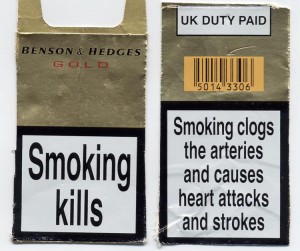
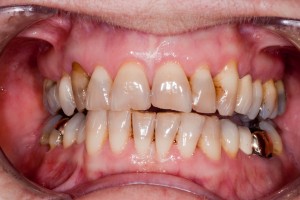
If you smoke, your breath is likely to smell of stale smoke. As well as making your breath smell, smoking also causes staining and loss of taste and irritates your gums. This increases your risk of gum disease, another cause of bad breath.

Medical conditions

Bad breath can be caused by a medical condition, although this is rare. Dry mouth is a condition that affects the flow of saliva. This can cause bacteria to build up in the mouth, leading to bad breath.

  • Other medical conditions that can cause bad breath include:
  • Infections in the lungs, throat or nose
  • Bronchitis
  • Sinusitis
  • Diabetes
  • Liver or kidney problems

Crash dieting, fasting and low carbohydrate diets can also cause bad breath.

Treatment and prevention of bad breath

dental instruments to keep halitosis at bayThe most effective treatment of bad breath is usually improving your dental hygiene. To avoid bad breath, keep your mouth and teeth clean.
- Regularly brush your teeth and gums. Choose a small to medium sized toothbrush with soft multi-tufted bristles and replace your toothbrush every 3-4 months. Your dentist is likely to recommend that you brush your teeth at least twice a day with fluoride toothpaste.

- Floss in between your teeth. Use dental floss to clean between your teeth and remove any trapped food that could cause bad breath and tooth decay.

- Keep your tongue clean. Use a separate tongue scraper to lightly brush your tongue.

toothbrushRegular check-ups with your dentist will make sure any plaque is removed from your teeth. It will also ensure any signs of gum disease are noted and treated early on.


Do you brush ‘Gangnam Style’?

Monday, 25th February , 2013

Could brushing your teeth to the beat of ‘Gangnam Style’ really have oral health care advantages?

We’re always on the lookout for new and inventive ways to help you keep your oral hygiene up to the high level you’d like. We’ve seen egg timers with a ‘Tooth Brush’ countdown on them and most modern electric tooth brushes also include some form of indicator as to how well/long you are brushing – but now we bring you the ‘Gangnam Style’ technique!

Reported in the Daily Mail last week is a new equation, worked out by Ivor Novello nominee Jim Williams. He indicates that songs that have eight bars of music, followed by another two sets of four bars can encourage brushing.

They must also include a double chorus and middle ‘bridging’ section, known as a double eight.

Jim Williams went on to identify a series of songs that fulfilled this criteria with PSY’s Gangnam Style coming out on top. Dental expert, Tina Tanna, who worked with Aquafresh to create the brushing technique, said: ‘Children must brush at least 35 times on each side of the mouth – using seven strokes in five areas – to ensure their teeth and gums stay healthy.’

Using a song to help keep time is a great idea we think – it helps to keep the correct pace and will encourage kids to have some fun whilst brushing helping them maintain a good health care routine.

So, tooth brushes at the ready… give it a go…

Blue Court Dental Care is a dentist in Harrow offering  oral health care advice and treatments to the local people. Please do call us or pop in if you have any dental health concerns.

Dental Erosion and Tooth Wear – What can you do?

Friday, 25th January , 2013

What is dental erosion?

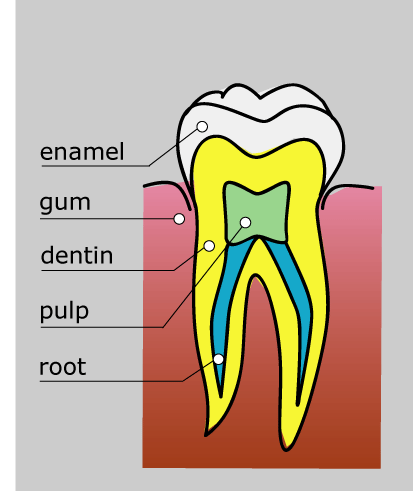
Erosion is the loss of tooth enamel caused by acid attack. Enamel is the hard, protective coating of the tooth, which protects the sensitive dentine underneath. When the enamel is worn away, the dentine underneath is exposed, which may lead to pain and sensitivity.

Dental erosion, also known as tooth erosion, is the largely preventable yet irreversible damage to tooth structure due from exposure of acids through food or drink, or from sometimes chronic medical conditions that are not dental related. It has only been recently, that tooth erosion has been recognized as a dental health problem despite it being commonly present especially among children and teenagers.

Tooth Wear & Erosion Causes

Most often, tooth erosion is caused by consumption of acidic foods and drinks – typically those which have a ph that is below 5.7. Sodas and other carbonated drinks, including those that are diet or un-caffeinated, are a frequent culprit along with fruit juices, especially those that contain citrus.

With dental erosion, the damage is caused by citric and phosphoric acids.

fruit for teeth erosionsome drinks might cause tooth wear
Saliva is designed to act as a buffer that regulates the impact of acidic drinks that have been consumed but some drinks have a resistance to the effect. Research has concluded that fruit juices are the most resistance to saliva benefits.

ph level in foodOther drinks include:

  1. Fruit based carbonated drinks
  2. Flavoured mineral waters
  3. Other carbonated drinks such as sodas and mineral water
  4. Some medications such as vitamin c.

Conditions such as acid reflux, heartburn, indigestion and more serious medical problems like anorexia and bulimia can also contribute to tooth erosion.

Symptoms of tooth erosion


  1. Discolouration – Since the dentine of the tooth is exposed during tooth erosion, discolouration or yellowing of the teeth can occur. The more dentine that is exposed, the more yellow the teeth will become.
  2. Tooth Sensitivity – Sensitive teeth are very common symptoms of tooth erosion because the enamel that protects the teeth wears away, leaving exposed dentine.
  3. Rounded teeth – During the early stages of tooth erosion, it is common for teeth to have a rounded look.
  4. Transparent or sand blasted appearance – It is not uncommon in the early stages of tooth erosion for the teeth to have a sand blasted look or for the tips of the front teeth to look transparent.
  5. Cracking – If tooth erosion continues into the advanced stage, the edges of the teeth can start to crack and have a rough feeling.
  6. Dents – Little dents can start to appear on the biting areas on the teeth.
  7. Extreme sensitivity – The teeth can become extremely sensitive during the advanced stage of tooth erosion.
tooth erosiondental erosion

Treatment of tooth wear

Consult a dentist about treatment options to restore enamel. Your treatment will depend on the level of erosion and presence of cavities, and can include crowns, composite fillings or veneers.

  1. Crowns can be used to cap the teeth and restore them to their original shape.
  2. Veneers cover eroded, cracked, broken or chipped teeth and help prevent further erosion.
  3. Composite fillings can be used to repair cavities, which contribute to tooth erosion. These fillings are designed to smooth out surfaces and decrease tooth sensitivity.

How can you protect tooth enamel from erosion?

Good dental care can help prevent tooth enamel from erosion.

  1. Cut down on acidic drinks and foods, such as carbonated drinks and citrus fruit juices. If you do drink them, do so at meal times to minimise their effects on the enamel.
  2. Rinse your mouth with water right after having acidic foods or drinks.
  3. Drink fizzy drinks and fruit juices with a straw which helps acids to bypass the teeth.
  4. Finish a meal with a glass of milk or a piece of cheese to neutralise acids.
  5. Chew sugar free gum with xylitol, which helps neutralise acids from foods and drinks.
  6. Drink more water during the day if you have a dry mouth or low saliva problems.
  7. Use a soft toothbrush and avoid brushing too vigorously.
  8. Wait for at least 30 minutes to brush teeth after they have been exposed to acids in foods or drinks. Acid leaves the enamel softened and more prone to erosion during brushing.

Use fluoride toothpaste to strengthen your teeth against decay.

You should have your teeth checked regularly by your dentist to prevent the need for tooth enamel restoration. When dental erosion is caught early, your dentist is able to suggest treatment that may prevent further erosion or tooth decay.

Blue Court Dental Centre in Harrow offers a range of dental hygiene preventive treatments to help you keep your teeth for life.

Toothpicks and Keeping your Teeth Clean

Monday, 17th September , 2012

There was a recent case reported in the British Medical Journal in which a woman swallowed a toothpick which went on to cause some quite serious further medical and health problems for her. This was also reported on the BBC, you can read the full BBC report here.

Clearly this woman was trying to clean her teeth with a toothpick, so we thought it would be a good idea to go through how to keep your teeth clean and hopefully avoid such accidents in the future!

You oral healthcare regime should include brushing, flossing and rinsing.

Teaching the people of Harrow how to brush.

  • Using an electric toothbrush is the best way to brush your teeth as they are designed to have the perfect action. If you use a manual brushing technique use a small brush and work in a circular motion.
  • Decide on a sequence to brushing your teeth and stick with it each day, ensuring that you brush the biting surface or tips of your teeth, the inside and then the outside.
  • Move around the sequence tooth by tooth. Avoid pressing too hard, but make sure you clean adequately. This is where an electric toothbrush will help as many of the better models have pressure sensors.
  • Ensure that you clean around the entire tooth surface right the way from the inside, over the top and down the front of the tooth including the junction between your tooth and the gum.

Top tips for flossing your teeth.

  • Floss daily between your teeth, this ensures that any debris is cleaned on the surfaces between your teeth which is so difficult to reach with a toothbrush.
  • Use a fairly long length of floss, about 30 cm. Wind the ends around your index fingers on each hand and pull floss taught.
  • You can then gently pop floss between each of your teeth each time winding it a small amount along on each finger.
  • Gently move the floss up and down against the back of one tooth and then the front of the next, pop floss back up again, and move along to the next tooth.

Rinsing with mouthwash.

Even with an electric toothbrush and flossing there may be small areas that you miss, so using a good-quality fluoride mouthwash will help you to rinse out any areas of debris that you have missed.
Rinse with mouthwash after every time you brush your teeth, both morning and night.
Our dental practice in Harrow also has a dental health educator known as a Dental Hygienist, this person is specially trained to help you look after your teeth and help you with your oral health plan. Looking after your teeth is the best way to spend as little time and money at the dentist as possible, so it’s a worthwhile investment in yourself.


Helping Harrow prevent tooth decay

Friday, 17th August , 2012

Preventing tooth decay is a major part of the work of any dental practice. Tooth decay can cause problems with the aesthetics of your smile, pain,  tooth loss and subsequent problems with your bite if the whole tooth all parts of the tooth are lost due to the tooth decay.

How to detect tooth decay

Detecting tooth decay there is done with a visual examination of your teeth, however a very common part of your tooth  to become affected by decay is the contact point between each tooth. This area is not so easy to keep clean with regular toothbrushing, and is more prone to bacteria buildup and therefore tooth decay. Your dentist in the Harrow area will take x-rays to view this area between your teeth, to see if there has been any form of tooth decay.

Preventing tooth decay.

One of the best ways of preventing tooth decay is to ensure that you clean your teeth properly each day. Regular brushing with an electric toothbrush, flossing with either take or floss and then a quality fluoride mouth rinse will ensure that your chances of tooth decay arising are lowered.

As tooth decay often happens in the areas between your teeth, we also recommend visiting your dentist at least every six months. Doing this allows your dentist to monitor any areas where tooth decay may be taking hold, and then to decide if remedial treatment to prevent the decay from worsening is required. If you do not visit your dentist, you will not be able to see this progression of decay in your tooth possibly until you are faced with a great deal of pain. It may then be too late to save the tooth!

Dental hygiene and tooth decay.

Within each dental practice there are specially trained people to look after various aspects of your dentistry needs. This dental practice in Harrow uses a dental hygienist to ensure that your teeth are adequately cleaned and that your oral health care routine is such that tooth decay is much less able to take hold. Visiting the dental hygienist is a vital an integral part of preventing tooth decay health. and ensuring that you keep your teeth fit and healthy for life..

Blue court dental practice is keen to ensure that the people of Harrow have the least amount of tooth decay possible, and so all patients are recommended to our dental hygienist to help maintain your oral and dental health.

The sugar factor…

Thursday, 26th July , 2012

To help keep your teeth healthy, it is advised that you eat only three or four times a day, avoiding the temptation to snack in between – and if you must snack, then choose something that has no or minimal amounts of sugar in it, such as cheese, nuts, raw vegetables or breadsticks.

This is because every time you eat or drink something with sugar, the bacteria in your mouth reacts with the sugar which produces acid that attacks your teeth.  If these attacks happen too often, your teeth will suffer decay.

In addition, you should avoid acidic or fizzy drinks, as these can cause tooth erosion, where the hard outer coating (enamel) of your teeth is gradually worn away by repeated acid attacks.

If you must eat or drink sweet stuff, either ensure it is sugar free ( low sugar or no added sugar still contains sugar!), or indulge less often – at or immediately after mealtimes is ideal.  You can also chew sugar-free gum with xylitol after eating or drinking to help boost saliva production and neutralise decay.

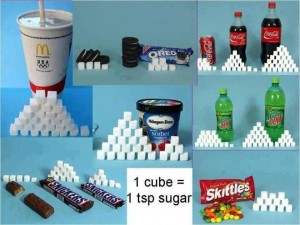
Below you can see a couple of pictures of common snacks and drinks with their equivalent sugar content.


Are your gums healthy

Tuesday, 24th April , 2012

Gum infections are the most common cause of adult tooth loss but often go unnoticed as they progress without pain.  However, the following are warning signs that shouldn’t be ignored:

  • Gums that bleed when brushing/flossing
  • Bad breath or bad tastes in the mouth
  • Loosening of teeth
  • Loss of teeth
  • Gums that are red, swollen, or tender
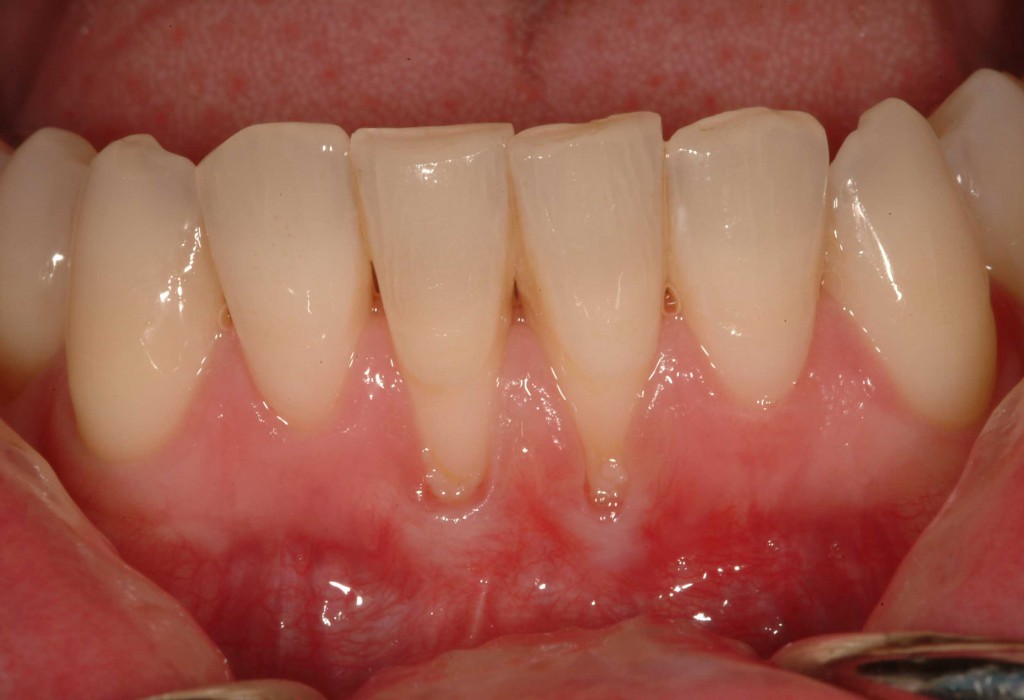
  • Gum recession
  • Teeth that drift from their original position

In order to prevent gum disease and keep your teeth and gums healthy, we advise:

Brush your teeth twice a day with fluoride toothpaste, especially at bedtime.  You should clean them for 2 minutes, making sure you brush every surface of each tooth – be thorough but not forceful as you can cause damage to your teeth and gums.

Make sure youclean between your teeth and under your gumline.  We advise you on the best method for your teeth.

Eat a healthy diet.  In particular, don’t eat too much sugar, and dont consume sugary foods or drinks too often – we recommend limiting sugar intake to mealtimes only.

Don’t smoke! Smoking has a particulary damaging effect on your oral health.  Smokers are four times as likely to suffer gum disease ( the biggest cause of tooth loss among UK adults ).

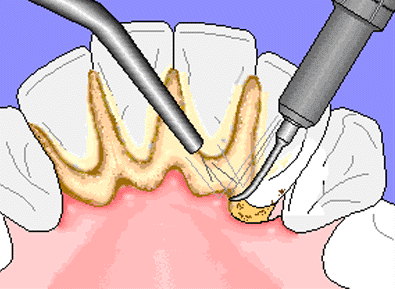
Visit the practice regulary so we can check your mouth for signs of potential problems and treat them early.  Having your teeth professionally cleaned by us also helps protect you from gum disease by removing any hardened plaque and flushing away plaque bio-films.

If you are overdue for a check-up or have any concerns, please give us a call and book an appointment, and let us help you to enjoy healthy teeth and gums for life!

Mercury Amalgam Removal

Tuesday, 28th February , 2012

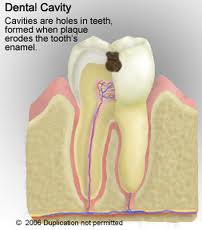
A routine treatment for dental decay is to use fill the area with an amalgam filling. But what is decay?

Using higher magnification and powerful lighting, it is easier to detect decay at an early stage to prevent excessive tooth damage. When cavities are small, they are much easier and less expensive to treat.

Early tooth decay does not tend to show many physical signs. Sometimes the tooth looks healthy, but we may be able to see from an x-ray whether you have any decay under the enamel, any possible infections in the roots, or any bone loss around the tooth.

If the decay is not too serious, our cosmetic dentist will remove all the decay and restore the tooth with a white (tooth coloured) filling.

We can also safely replace silver amalgam fillings with white tooth coloured fillings. Here’s a video that shows this process and the possible results:

Click to watch on YouTube


Dr Nishan Dixit

Find out how to go keep your teeth fresh and healthy for life.

Grab your free guide to life long dental health here…

Dr Nishan Dixit BDS (Lond) 1994 ,LDS RCS (ENG) 1994 GDC Reg No. 70208


What do Gum Disease and Whoopi Goldberg have in common?

Monday, 9th January , 2012

Gum disease can progress painlessly on the whole which means you might not notice the damage it is causing to your gums and bone.

However,  active bacteria can make your gums quite sore which can lead to gum abscesses. If Gum Disease is not treated over a number of years, the bone supporting the teeth can be lost. If the disease is left untreated for a long time, treatment can become more difficult.

There are now also links between gum disease and your overall health, as Whoopi Goldberg discusses in this videoi

If you can’t see the video above, click here to watch on YouTube.

To help you keep your body, teeth and gums healthy I’ve also written a free guide on the subject – you can download your free copy here.


Find out how to go keep your teeth fresh and healthy for life.

Grab your free guide to excellent dental health here…

Dr Nishan Dixit BDS (Lond) 1994 ,LDS RCS (ENG) 1994 GDC Reg No. 70208